
03 — Applications
Where the oil is,
the problem is the same.
Different industries, different fluids, different failure modes. But the contaminant list is short and the arithmetic behind it never changes.
Tire & rubber · Marine · Automotive
Mining · Textile · Defence
Water · Reclamation
Twelve sectors we work in.
If your sector is not listed, the underlying problem is usually one of these. Ask.
| Sector | Typical fluids | What we prevent | Series | |
|---|---|---|---|---|
| 01 | Steel & rolling mills | Industrial gear oil, oil-film bearing oil, hydraulic and roll-neck oil, 320 grade and above. | Bearing brinelling and rolling-contact fatigue in the mill drive line. | FM · ASD |
| 02 | Petrochemical | Turbine oil, compressor oil, process and anti-corrosion fluids. | Water carry-over, acid formation and compressor deposits. | VAC · FM |
| 03 | Power generation | Hydro, thermal, wind and gas turbine oil; electro-hydraulic control oil. | Sticking of governing valves; loss of control-system cleanliness. | VAC · STK |
| 04 | Lithium battery & membrane | Dielectric fluids, coating fluids, process solvents. | Particle ingress that fails a downstream count rather than a gauge. | VAC · STK |
| 05 | Tire & rubber | Polymeriser oil, extender oil, mixing-room hydraulic oil. | Polymer degradation and unstable batch quality. | VAC · FM |
| 06 | Marine | Shipboard hydraulic, steering and bilge fluids; fuel oil. | Water and gas in hydraulic systems; fuel cleanliness at the burner. | VAC · PDM |
| 07 | Automotive & machining | Quench oil, way lubricant, CNC hydraulic oil, assembly-line systems. | Quench-medium degradation; hydraulic drift on the line. | STK · MOB |
| 08 | Mining & coal chemical | Heavy gear oil, wash systems, coal-chemical process circuits. | Abrasive particulate wear on open gearboxes and pumps. | FM · ASD |
| 09 | Textile & printing | Heat-transfer oil, dye-house wastewater, printing inks. | Thermal degradation of heat-transfer oil; colour and COD in effluent. | VAC · Membrane |
| 10 | Defence & aerospace | Hydraulic and electro-hydraulic fluids held to tight classes. | Cleanliness excursions that fail an audit, not a bearing. | VAC · STK |
| 11 | Water & oily wastewater | Produced water, oily effluent, industrial wastewater. | Dissolved hydrocarbon, colour and fine solids at the discharge limit. | Membrane |
| 12 | Lubricant production & reclamation | Base oils, used lubricating oil, refining side-streams. | Water, colour and acid carry-over into the finished blend. | VAC · FM · ASD |
Rolling mills: the arithmetic is unforgiving.
An oil-film bearing in a work roll runs on a wedge of oil a few micrometres thick. Wear metal, water from the seals, and oxidation product all end up in that wedge. The bearing does not report anything; it simply lasts less.
- Gear and bearing oil at VG 220 and above cannot be pushed through a conventional element at speed — centrifugal separation handles the viscosity honestly.
- Water above roughly 0.1 % starts acid formation, and acid attacks the anti-wear package the bearings depend on.
- Sludge from the same circuit has to leave the site. Drier cake means fewer containers and a smaller truck.
- Oil-film systems are rarely the only sump on a mill. One mobile unit on a shared trolley covers the auxiliaries too.
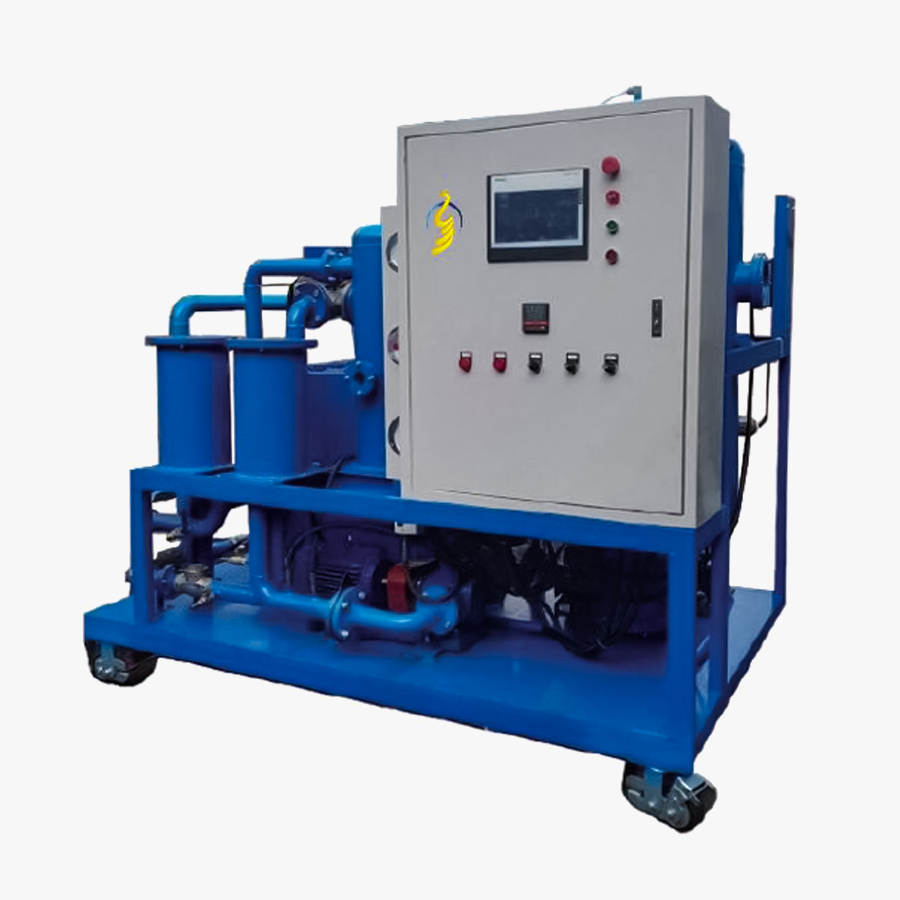
Turbines and compressors: water is the whole story.
In a turbine or compressor circuit, almost every expensive failure traces back to the same two words. Vacuum dehydration is not an upgrade here — it is the mechanism that removes what ordinary filtration cannot reach.
- Dissolved water is invisible to a sight glass and corrosive to the whole system.
- Entrained gas causes foaming, unstable pump efficiency and cavitation downstream.
- Governing and control valves need a cleanliness class, not just a clear sight glass.
- Fire-resistant fluids, where present, need a dedicated unit — they cannot share a circuit with ordinary oil.
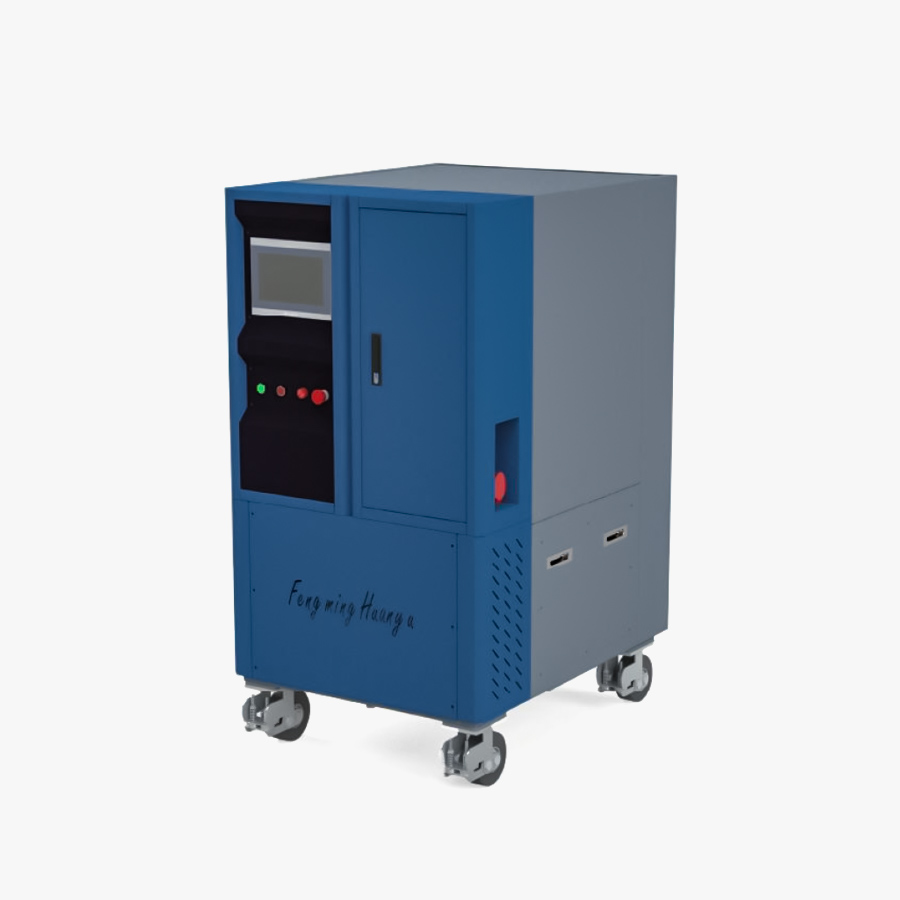
By fluid, not by industry.
Most enquiries are easier to answer from the fluid than from the sector.
Oily, particulate-laden
Gear, bearing, hydraulic and turbine oil with suspended solids and water. Centrifugal and vacuum families, with automatic sludge discharge downstream.
Clear but degraded
Dark, acidic oil that still passes a particle count. Decolourisation and electrostatic stages, run in place over an extended campaign.
Light fuels
Kerosene, diesel and light fuel oil. Polymer dehydration units, sized to station throughput.
Fire-resistant fluids
Phosphate-ester and water–glycol. A dedicated, chemically compatible purification circuit — never shared with ordinary oil.
Process solvents
Dielectric, coating and precursor fluids in battery and membrane production, where the count is audited rather than sampled.
Wastewater
Oily effluent and produced water. Membrane modules sized to the discharge limit, not to the inlet.
Next step
Describe the failure, not the industry.
What came out of the analysis? What did the machine do? Those two answers usually narrow the equipment down to one or two families.
- fengminghuanyuep@163.com
- Hotline
- +86 631 878 1386
- Response
- Within 24 hours